Adaptive Memory for AI Applications
Store, recall, and forget with a memory system that learns from every interaction. Retrieval quality improves automatically over time, powered by cognitive science and machine learning.
Get Started Free
Beyond Vector Search
Most memory APIs store embeddings and search by cosine similarity. Adaptive Recall does that and five layers more.
Standard Memory API
Adaptive Recall
What Makes It Different
Six capabilities that no other memory API offers, working together in every query.
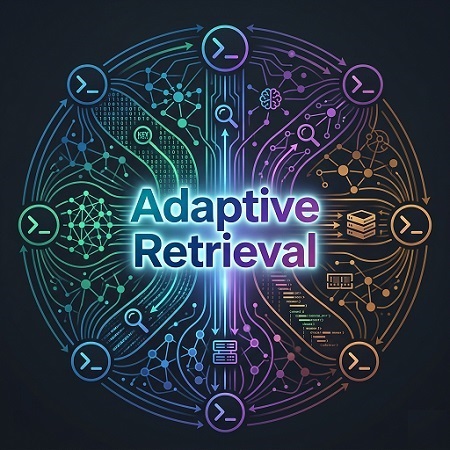
Adaptive Retrieval
Four search strategies run in parallel: vector similarity, temporal recency, full-text keyword, and knowledge graph traversal. The system learns which strategies to prioritize for each type of query.
Learn more →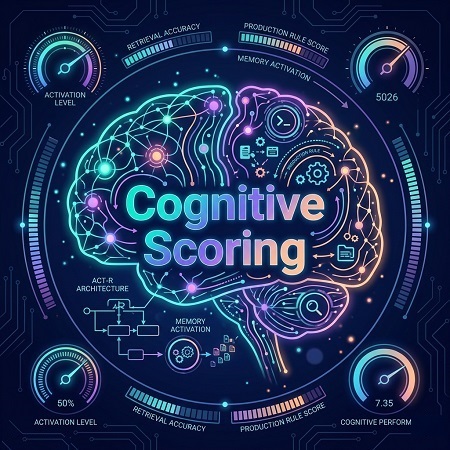
Cognitive Scoring
Results are ranked using ACT-R activation modeling from cognitive science. Recency, access frequency, entity connections, and validated confidence all factor into which memories surface first.
Learn more →
Knowledge Graph
Entities and relationships are extracted automatically from stored memories. The graph becomes a retrieval pathway, finding relevant information through connections rather than just text similarity.
Learn more →
Memory Lifecycle
Memories are not static rows in a database. They progress through stages, gain or lose confidence based on corroborating evidence, and fade naturally when no longer accessed.
Learn more →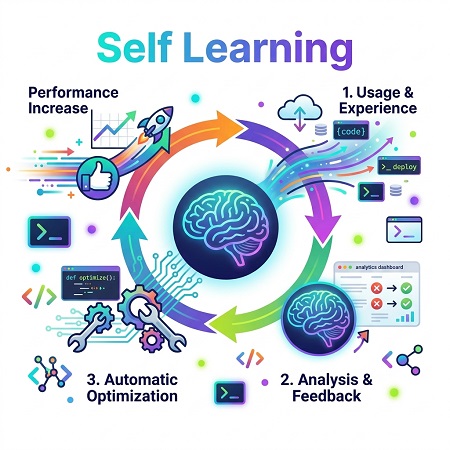
Self-Improving System
The system trains ML models on your usage data, validates every parameter change against real query history, and monitors its own retrieval quality. It gets better the more you use it.
Learn more →
Simple API
Eight tools: store, recall, update, forget, graph, status, snapshot, feedback. Works over MCP for Claude Code and other CLI tools, or plain HTTP REST for any application. Bearer token auth, JSON in and out.
Learn more →Adaptive Recall is built and maintained by AI Apps API, the company behind a family of AI tools and custom agent systems.